
Introduction
Just imagine…
You served 50 plates of your signature butter chicken dish, cafe is full, reviews are glowing, yet at the end of the month you are paying from pocket. frustrating, right?
This situation happens when you miscalculate Food cost
Food costing is the backbone of every successful food business. It reveals the real money behind each dish you serve so you can price correctly, control expenses, and actually make profit instead of just surviving.
In simple terms, calculating exactly what it costs you to produce one portion of any menu item including ingredients, unavoidable waste, labor, packaging etc. Many restaurant owners and chefs skip detailed food cost and rely on guesswork, only to watch their margins disappear silently.
In this guide we will walk you through everything you need to know: from understanding food costs and key formulas to a complete step-by-step recipe costing process. Whether you run a small cafe in Faridabad, a cloud kitchen or like us a tiffin service provider, learning food cost will help you protect your profits and grow with confidence.
Understanding of Food Costs
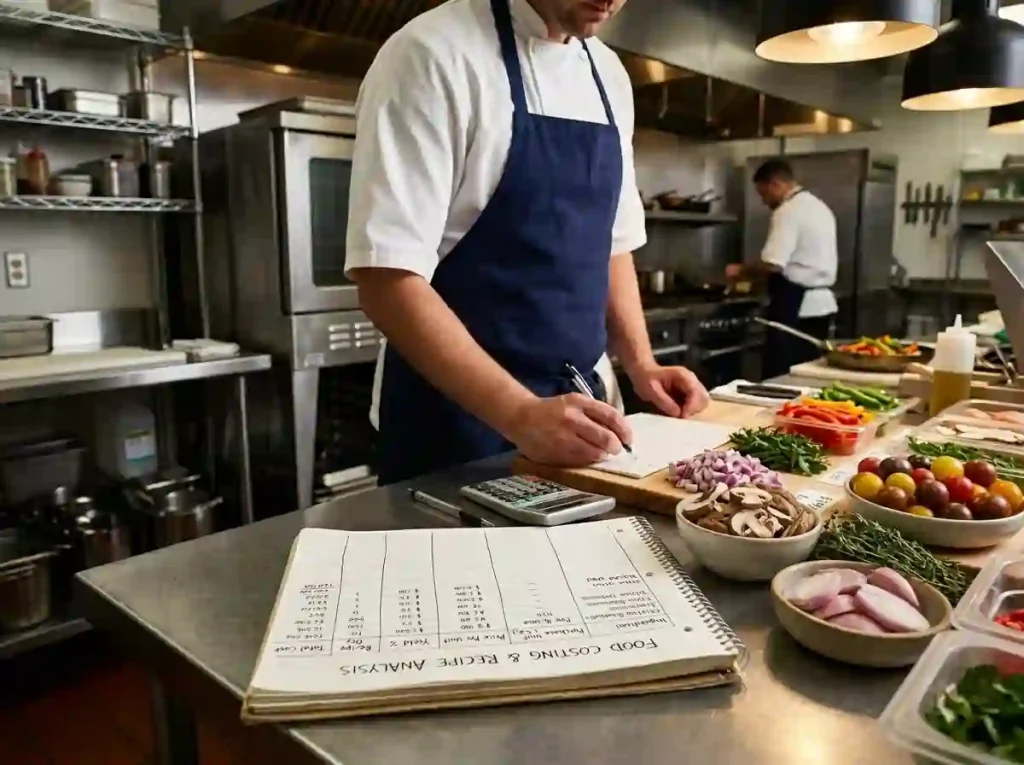
Before diving into calculations
It is important to clearly understand what food costing actually involves and its elements which help to find the cost of any dish you serve. People generally think that we just have to add up the price of ingredients.
For finding proper cost of your food, you must add these thing like
– direct ingredients
– labor
– overhead costs such as rent, utilities, and equipment
– unavoidable waste, spoilage, and loss of food during peeling and cooking.
Many restaurant owners only look at purchase prices and ignore these hidden factors, which leads to underpricing and shrinking profits.
You also need to understand the difference between theoretical (ideal) food costs and actual food costs that appear in your monthly reports. Theoretical finding cost assumes perfect portion control and zero waste, while actual food costing reflects real-world inefficiencies like over-portioning, theft, or fluctuation of food prices.
Yield loss are equally important in food cost because not every kilogram you buy becomes usable product like peeling, stems, and shrinkage during cooking reduce the final yield.
further distinguishes between:
-batch costing (for large quantities like sauces or gravies) for like what that yellow gravy, white gravy or those sauces cost you.
-single-serving costing (for individual plated dishes) like how much white gravy it put in that one dish and what its costing.
Food Costing Formula
From here important things started…
Food cost relies on several important formulas to measure profitability accurately. These formulas help you calculate costs, set prices, and track performance over time.
Below here are some food cost formula along with how to use them and clear calculation examples.
A) COGS (Cost of Good Sold)
This help in finding how much inventory left.
Formula: Beginning inventory + purchase – ending inventory
Example
Beginning inventory = Rs 12000
Purchase = Rs 18000
Ending inventory = Rs15000
COGS = 12000 + 18000 – 15000 = Rs 15000
B) Food Cost per Portion / Food Cost per serving
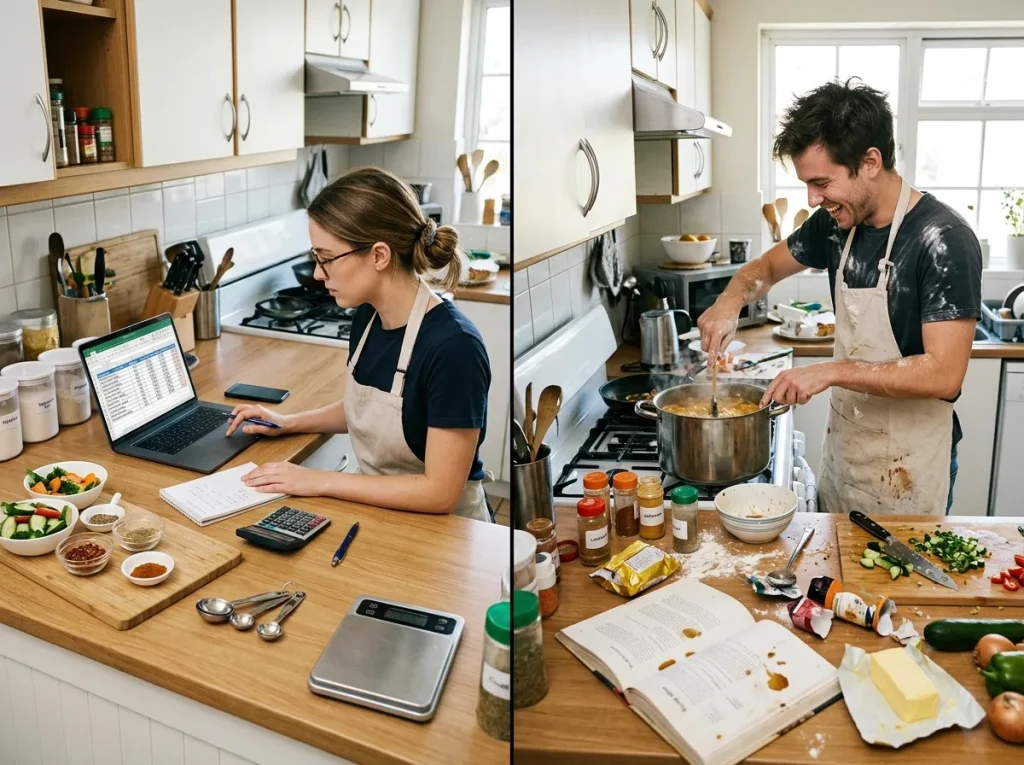
This formula gives the exact ingredient cost for one serving.
Formula: (Total Food Cost / Selling Price) * 100
Example: If a dish costs Rs 120 to make and you sell it for Rs 400,
Food Cost percentage = (120 / 400) * 100 = 30%.
Aim for 28-35% food cost percentage in most restaurants. If it goes above 35%, you need immediate attention.
The lower the better.
But don’t forget to add labours and overheads charges like gas, utility bills rent,repaires etc and that i will tell you how to add these in Next section.
C) Food Cost Percentage
This helps in finding food cost on a particular point of time like in a week, a month, a quarter or a year. But we said you have to do it every month or week its totally depend on you.
Formula: COGS / Total Food Sale * 100
Example:
COGS = Rs15000
Total Food Sale = 20000
Food Cost Percentage = 15000 / 45000 * 100 = 33.3%
The Q factor
Many restaurant owners forget small but important costs when doing food costing. This is where the Q Factor (also called Cover Cost or Spice Factor) becomes very useful.
The Q Factor is an extra amount added to the ingredient cost of each dish to cover hidden or complimentary items that are not listed separately on the recipe. These small costs add up quickly and can affect your actual costing accuracy.
What does the Q Factor include?
- Condiments (salt, pepper, sugar, ketchup, chutneys, sauces)
- Garnishes, lemon wedges, fresh coriander, or mint
- Bread, butter, papad, or complimentary starters
- Disposables (toothpicks, napkins, takeaway packaging)
- Minor waste, over-production, or small extras given to guests
How to apply the Q Factor in food costing
There are two common ways:
Fixed Amount Method (most practical for Indian restaurants)
Add a fixed rupee value per plate.
Example: Rs 8 to Rs 15 per dish (depending on your restaurant type).
If your main ingredient cost for a dish is Rs 140, add Rs 10 Q Factor
True plate cost = Rs 150.
Percentage Method
Add 5% to 10% of the total ingredient cost.
Example: Ingredient cost = Rs 140
Q Factor (8%) = 140 * 8 /100 = Rs 11.20
Plate cost = Rs 140 + Rs 11.20 = Rs 151.20
Step-by-step guidance
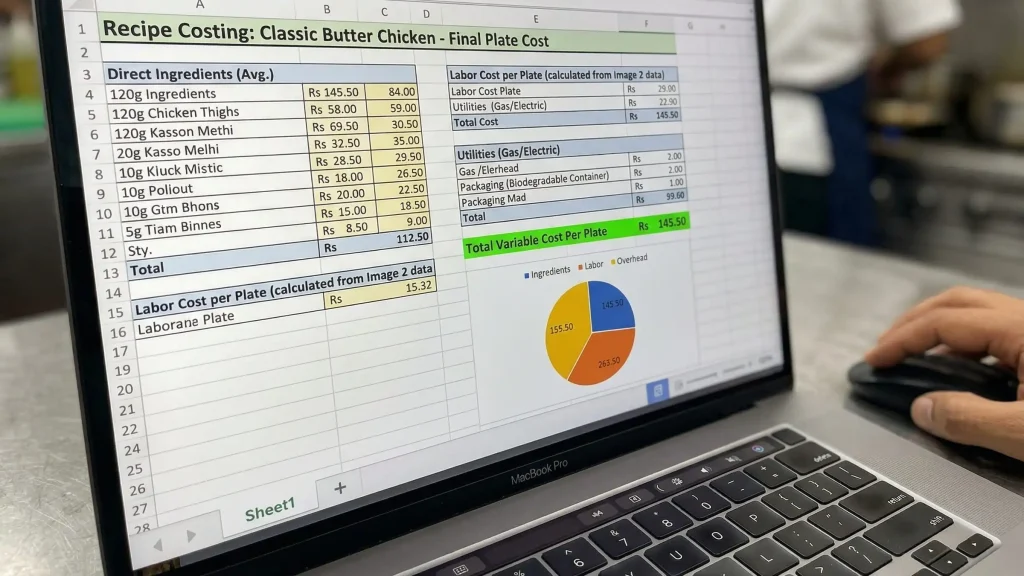
Food costing becomes easy and accurate when you follow a clear, systematic process every time you add or update a dish on your menu. This step-by-step guide which will help you to calculate the true cost of any recipe or menu item without missing important details. Whether you run a restaurant, cafe, or cloud kitchen.
Step 1: Standardize your recipes
Start by writing down the exact recipe with precise quantities and portion sizes. Which means every steps from the smallest pinch of pepper to the final presentation served to the customer.
Step 2: List all ingredients with quantities
Make a complete list of every ingredient needed for the dish.
Important Note:- people start a common mistakes that they note only the current price of ingredenits. Track the price range (from the lowest to the highest seasonal cost) and use the average price for your calculations to ensure long-term profitability.
Step 3: Calculating of making one portion
Calculate the cost for the exact quantity used in one portion. Add up all ingredient costs to get the total food cost per plate.
This is the basic food cost in your food costing process.
Step 4: Add labor, gas, utilities, packaging, and other variable costs
Most important thing to include more than just ingredients. Here is exactly how to calculate and add these costs:
–Labor cost per dish: Monthly salary of worker divided by number of dishes served in the month. Example monthly salary = Rs 10000 and you serve 1000 dishes in a month which means salary per dish = Rs 10
Similarly for Gas, Fuel and Utility bill.
–Packaging cost: Add the cost of box, bag, or container used for one dish.
Pro tip: Use a simple costing spreadsheet or template for food costing. Once you create it, you can reuse the same format for every new recipe.
Common Mistakes to Avoid
Even experienced chefs and restaurant owners make mistakes that quietly eat their profits. Knowing these common errors can save you a lot of money and frustration.
- Using old or outdated supplier prices instead of current rates in finding food cost.
- Not having track of wastage and spoilage
- Ignoring labor, gas, utility, and packaging costs in food cost
- Failing to standardize recipes and portion sizes
- Calculating food costing only once and never updating it when ingredient prices change
- Mixing batch costing with single-portion costing incorrectly
Avoiding these mistakes will make it more accurate and effective. Always double-check your calculations and review your food costs numbers at least once every 2 month.
Managing Food Cost Over Time
Finding food cost is not a one-time activity; it needs regular attention to stay effective. It helps you manage costs even when ingredient prices fluctuate or business conditions change.
- Dealing with ingredient price fluctuations
Update your food cost sheet every time supplier changes prices. Keep a record of old and new prices so you can see the impact clearly. If an ingredient becomes expensive, consider changing the recipe, reducing portion size, or increasing the selling price slightly.
Regular monitoring is the key to successful food costing during inflation or supply issues.
Bonus Tips
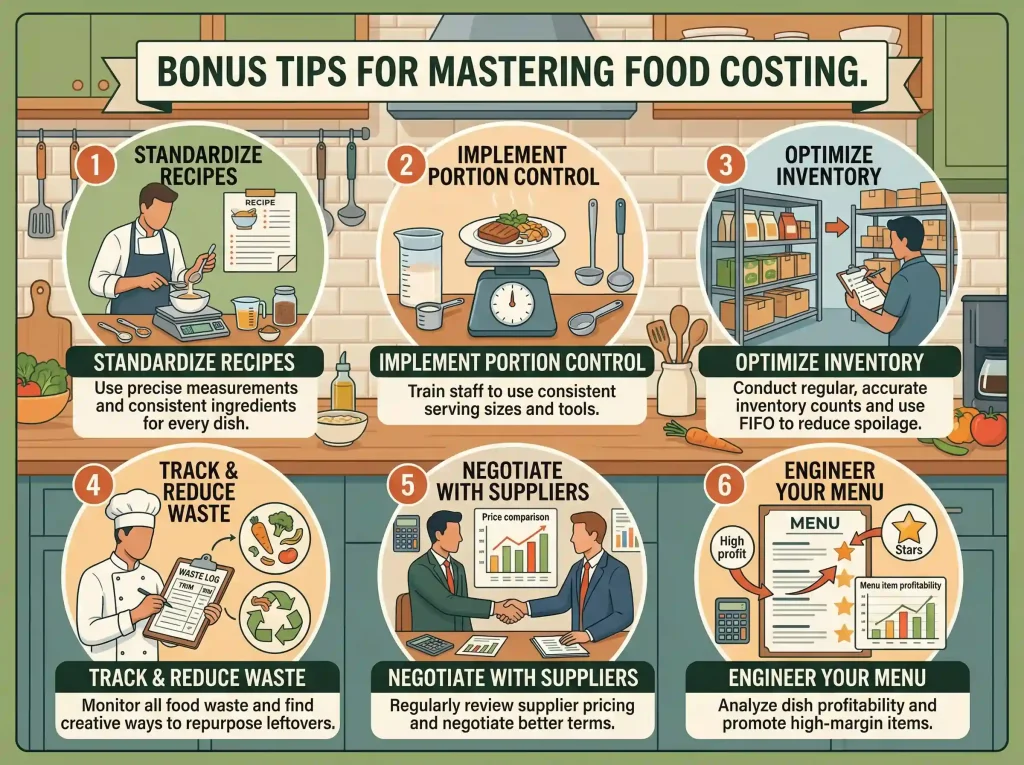
- Negotiate better rates with suppliers by showing them your consistent order volumes and long-term relationship. Even a 5% reduction in purchase price can significantly improve your costing.
- Do not copy your competitor’s menu prices blindly. Every kitchen has different overheads, labor costs, and efficiency levels. Always base your pricing on your own, we do not know what others are charging.
- Understand COGS (Cost of Goods Sold) and industry benchmarks.
Indian restaurant industry benchmark of food cost is 28 to 35% excluding tax labours and overheads charges. Do not exceed 35% because that means you are spending more on ingredients relative to what customers are paying, which directly reduces your profit margin.
- Always calculate food cost using prices excluding tax (GST). Including tax in your calculations gives a wrong picture of your real margins. Use net purchase price (excluding GST) for accurate costing, and add tax only when finalizing the selling price for the customer.
- Use menu engineering: Identify your high-profit and low-profit dishes using food costing data. Promote high-contribution-margin items and either improve, reprice, or remove the poor performers. Also train your staff for upscaling and promoting high contribution margin items which ultimately increases your profit.
- Train your kitchen staff on portion control and the importance of following standardized recipes. Small daily deviations can destroy your targets of a month.
- Switch to seasonal and affordable ingredients which helps in reducing food cost and buy in bulk only when you have good inventory control to avoid waste.
FAQ (frequently asked questions)
Q1) Why you should use Q Factor in your food costing?
Without the Q Factor, your costing underestimates the real cost of serving a guest. This leads to under-pricing and lower profits. Adding a realistic Q Factor gives you a more conservative and accurate total plate cost, helping you set better selling prices.
Pro Tip: Start with Rs 10 as Q Factor for most Indian restaurants and cloud kitchens. Observe your actual complimentary items for one week and adjust the number accordingly. Review it every few months as part of your regular food costing process.
Q2) What is the Restaurant Industry benchmark for Food cost?
The restaurant industry benchmark for food cost is generally between 28% and 35% of total food sales
If you go beyond
Lower Profits: Your profit decreases, leaving less cash to cover labor and overheads.
Reduced Margins: If not managed, high food costs can make a restaurant unprofitable.
Q3) What is food costing and why is it important for restaurants?
It is the process of calculating the exact cost of preparing and serving one portion of a menu item.
It also includes ingredients, labor, gas, utilities, packaging, waste, and the Q Factor. By it doing properly helps you set profitable prices, control expenses, reduce waste, and protect your margins instead of unknowingly selling at a loss.
Q4) Should I include GST/Tax when calculating food cost?
No. Always perform your food costing calculations using prices excluding GST. Use the net purchase price for ingredients and other costs. Add GST only when deciding the final selling price shown to the customer.
Q5) How do I calculate food cost percentage?
Use this formula:
Food Cost Percentage = [(Beginning Inventory + Purchases) – Ending Inventory] ÷ Total Food Sales × 100
Q6) How can I reduce my food cost percentage without reducing quality?
By using seasonal ingredients, controlling portions, reducing waste, negotiate with supplier for better rates, and applying menu engineering (promote high-margin dishes). Small consistent improvements give big results in food costing.
Conclusion
In the end, Now you know everything about food cost
Lets do a quick recap…
Food cost is not just a back-office work that i will do it later, it is the foundation of a every food business. Whether you run a restaurant, cloud kitchen, or tiffin service, knowing the true cost of every dish you serve puts you in control of your margins.
You now understand how to standardize recipes, list ingredients at average prices, apply the Q Factor for hidden costs, and add labor, gas, and packaging to find your real food cost. You also know food cost formula like food cost percentage and keep it within the healthy benchmark of 28–35%.
The most important takeaway: food cost is not a one-time task. Ingredient prices change, portions drift, and menus evolve. Review your costing numbers atleast once every two months to stay accurate and profitable.
Thank you for reading this complete guide on food costing. Put these practical strategies into action, track your results, and watch your business become more profitable and sustainable.
Best of Luck!
For more exciting Offers and updates, follow us on Instagram and Facebook
Last updated: 1 April 2026
Comments are closed.