Introduction
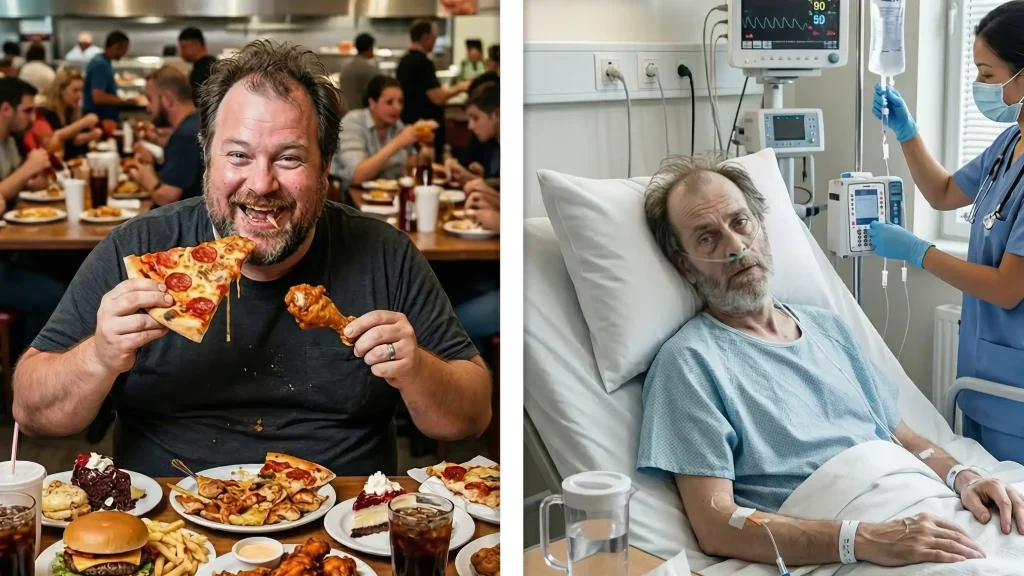
Have you ever wondered why our brains light up at the word Unlimited food? It’s a powerful marketing trap designed to make us ignore our health and our common sense. It looks like a feast but these aren’t selling you food; they are selling you the permission to overeat, which often leads to a cycle of poor health and regret.
for consumers to fall for value over quality. This is exactly why Ghar Ka Bana Shudhkhana focuses on bringing back the value of quality over quantity, ensuring that every meal nourishes your body rather than just filling your stomach.
I am on a mission to prove that unlimited health is far more valuable than unlimited food, providing tiffin with Homemade meals that respect your body and your budget.
How these Food Business Models Work
Did you notice that these unlimited cheap food business model let you eat as much as you want for such a low price and still make money out of it? In busy spots like Gurugram and Delhi, these street-side shops are super popular. Peoples line up for these deal, the spicy taste, and the fun of unlimited.
But behind the low price is a smart business tricks which we will uncover right here and right now:
1) How these businesses work and make profit out of it
A) Filling food first
They use high carbs, salt, and cheap oil which makes you feel full fast (your stomach stretches and sends stop signals in 15-20 minutes)
B) Small and slower refills
At first, they serve you generous portions hot, fresh, and satisfying. But when you go for a second or third serving, things start to change. The portions get smaller, and the service slows down.
This isn’t random, it’s a strategy. High-carb foods fill your stomach quickly, making you feel full faster. The longer you wait between servings, the less you eat overall. So while the first plate feels abundant, the following ones shrink in size but still contain similar amounts of carbs.
C) Customer appetite
90-95% eat normal amounts like 2-4 bhature, 10-20 momos, 200-300g chaap etc. Only 5-10% eat a lot (these are heavy eaters, but the shop makes it up from the many light eaters). The owner’s losses on big eaters but as compared to tiny eaters makes profits from crowds.
D) Play with Volume and save money
Unlimited food businesses are strategically set up their shop in high footfall areas where they can easily generate 1000+ sales daily. This ensures a constant flow of customers without spending heavily on marketing.
To keep costs low, many of these businesses are run by family members instead of hired staff, which reduces labor expenses. They also purchase cheap ingredients in bulk at cheaper rates, further increasing their profit margins.
Instead of investing in fancy interiors, they operate from small carts or simple shops with minimal rent.
2) Food Cost and Hygiene Reality
Food cost and Quality
Let’s take an example of unlimited Chole Bhature of RS 50
Food cost ( based on per plate)
– Dough(mix of cheap maida and atta in which maida quantity is higher because of carbs and low cost) = RS 1
– Cheap Chole RS 70/kg, one kg can make 20 to 25 people of food = RS 4
– Cheap Oil (RS 90/litre, often reused again and again) = RS 2
– Gravy = RS 2
– Low quality of salad and chutney = RS 1.5
– Disposal price as they buy in bulk = RS 0.5
– Gas, masala and miscellaneous = RS 4
Total costing = RS 15 to 18 per plate
Let’s take another example of unlimited Malai/Tandoori Chaap
Food cost (it’s based on per plate)
– Soya Chaap RS 20/250g = RS 10
– Cheap bulk buying of vegetables (capsicum, onion, tomato and others) = RS 5
– Gravy = RS 3
– Rumali Roti = RS 0.5
– Low quality salad and chutney = RS 1.5
– Charcoal = RS 10
– Disposal = RS 0.5
– Masala and miscellaneous = RS 4.5
Total costing = RS 35 to 43 per plate
Unlimited food at these price points makes it very difficult to maintain high quality. To keep costs within ₹15–₹18 for chole bhature or ₹35–₹43 for chaap, vendors often depend on cheaper ingredients, low-grade oil, and bulk-prepared gravies.
The priority shifts from freshness and taste to cost control and high volume sales. Chole is usually cooked in large batches, dough contains more maida because it is cheaper and filling, and chaap is prepared using basic marinades instead of rich, high-quality ingredients and high amount of MSG/Ajinomoto is used in food to spike the flavour and keep you eating.
While the food may look attractive and taste fine at first, the overall quality specially in terms of nutrition, ingredient standards, and consistency is often compromised to sustain such low pricing.
Hygiene
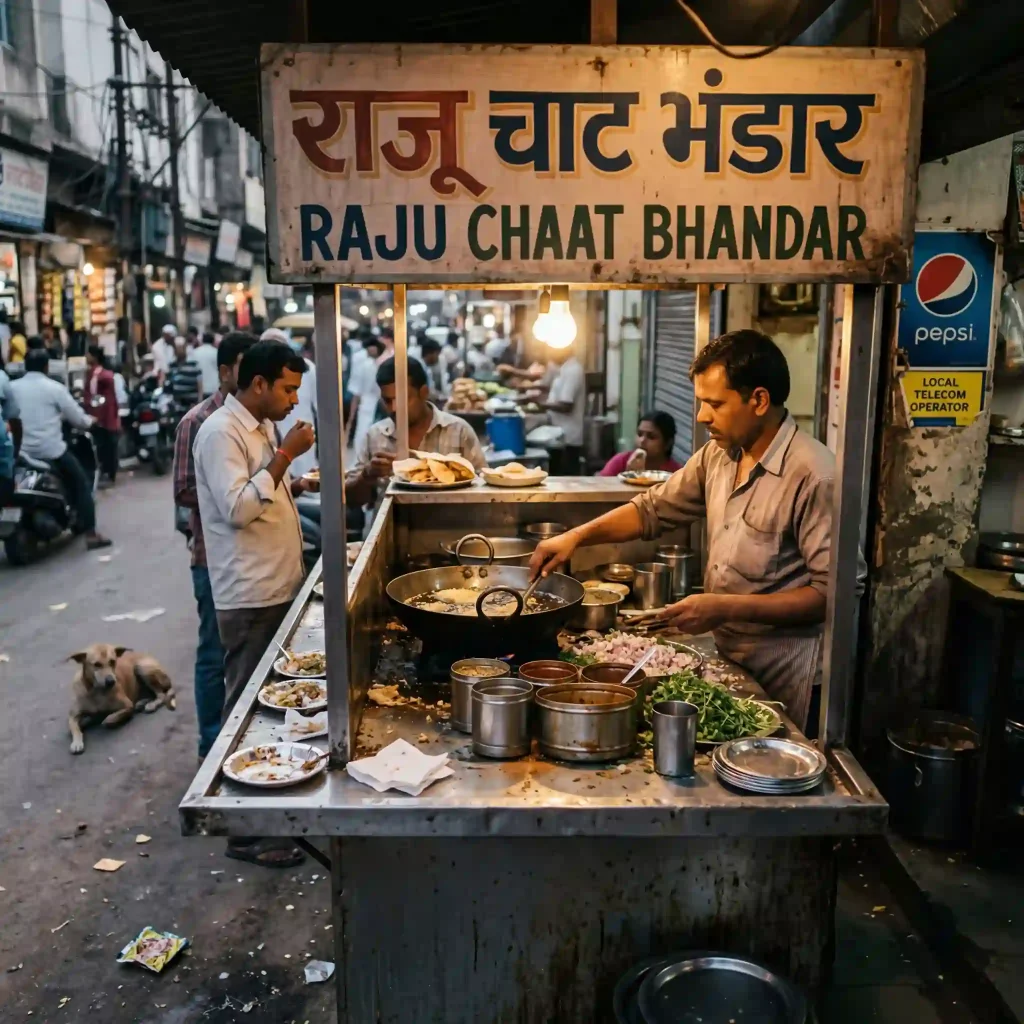
Unlimited food often faces serious hygiene challenges due to its low pricing model and high customer volume. To serve large numbers of customers quickly, food is usually prepared in bulk and kept for long hours, increasing the risk of contamination and loss of freshness. In many cases, oil is reused multiple times which not only reduces quality but can also affect health. Limited staff and constant rush make it difficult to maintain proper cleanliness in cooking areas, utensils and serving spaces.
Storage is another concerning part as ingredients may not always be kept under ideal conditions, especially in small shops or street setups with limited infrastructure. Water quality, hand hygiene, and cross-contamination between raw and cooked food are often overlooked during peak hours. Additionally, frequent handling of food and cash by the same person can further increase hygiene risks.
As a result, customers may unknowingly compromise on food safety while focusing only on quantity and price.
Fake illusion of value giving
Paying RS 50 for eat until you physically cannot eat anymore. Low fixed price anchors your mind to think you are getting an unbelievable bargain, especially in a city like Delhi where a normal meal easily costs RS150–300. The word unlimited triggers greed and the fear of missing out, making you feel like you are missing a great opporunite and it is worth your money.
In reality, the Unlimited food shop owners uses cheap, high-volume, filling ingredients like Chole bhature that cost them very little per person. The quality is often poor, portions may be controlled cleverly, and the entire offer is designed as a psychological trap rather than true generosity.
The food are generally:-
-High in refined carbohydrates and added sugars
-Low in protein, fiber, and micronutrients
-Loaded with trans fats and cheap vegetable oils
The Hidden Cost
What you save at the table, you spend at the clinic. The long-term medical costs of diet-related diseases like diabetes, heart disease, hypertension, and obesity. A health study estimated that poor diet people having more chances of death worldwide than any other risk factor, including smoking.
Similar Times of India and National Institute of Heath report said that unhealthy diets contribute to around 11 million deaths annually surpassing even smoking, which is responsible for approximately 8 million deaths each year.
How Unlimited food can cause serious health issues?
Eating cheap and low-quality food may seem harmless, but your body quietly pays the price. When food is made to be unlimited and inexpensive, it often sacrifices nutrition, balance, and portion control. Over time, this pattern can slowly damage your health without even you realizing.
Overeating Stretch Your Stomach
When you eat food Unlimitedly, your stomach keeps stretching again and again. Normally, your body tells you when you are full but overeating weakens this signal. Slowly you start noticing that you need more food just to feel satisfied. This creates a habit of constant overeating. Meanwhile, low quality o[ food disrupts your gut health, increases inflammation, and weakens your immune system
Blood Sugar Spikes Ups and Downs
Most Unlimited meals are rich in refined carbs, sugar, and fried items. These foods quickly increase your blood sugarwhich gives you a sudden burst of energy. But soon after your sugar levels drop sharply, making you feel tired and hungry again. This repeated cycle puts pressure on your pancreas and increases the risk of insulin resistance.
Long-Term Health Effects
Obesity and Metabolic Problems
Eating unlimited food leads to weight gain because of excess calories. But the problem goes deeper than just weight. It increases the risk of metabolic syndrome which includes high blood pressure, high blood sugar, and unhealthy fat levels. These conditions together raise the chances of serious diseases.
Heart Disease Risk
Unlimited meals contain unhealthy fats which increase bad cholesterol and reduce good cholesterol. Over time, this leads to fat buildup in arteries which makes it harder for blood to flow properly and increasing the risk of heart attacks and strokes.
Mental Health Impact
Poor nutrition also affects your brain and your gut. This can lower mood, reduce focus, and increase chances of anxiety or depression over time.
Chronic Inflammation
Most unlimited food options are high in sugar, low grade refined oils, and additives that cause long-term inflammation.
My friend story: From Unlimited Buffet to Hospital Bills Journey
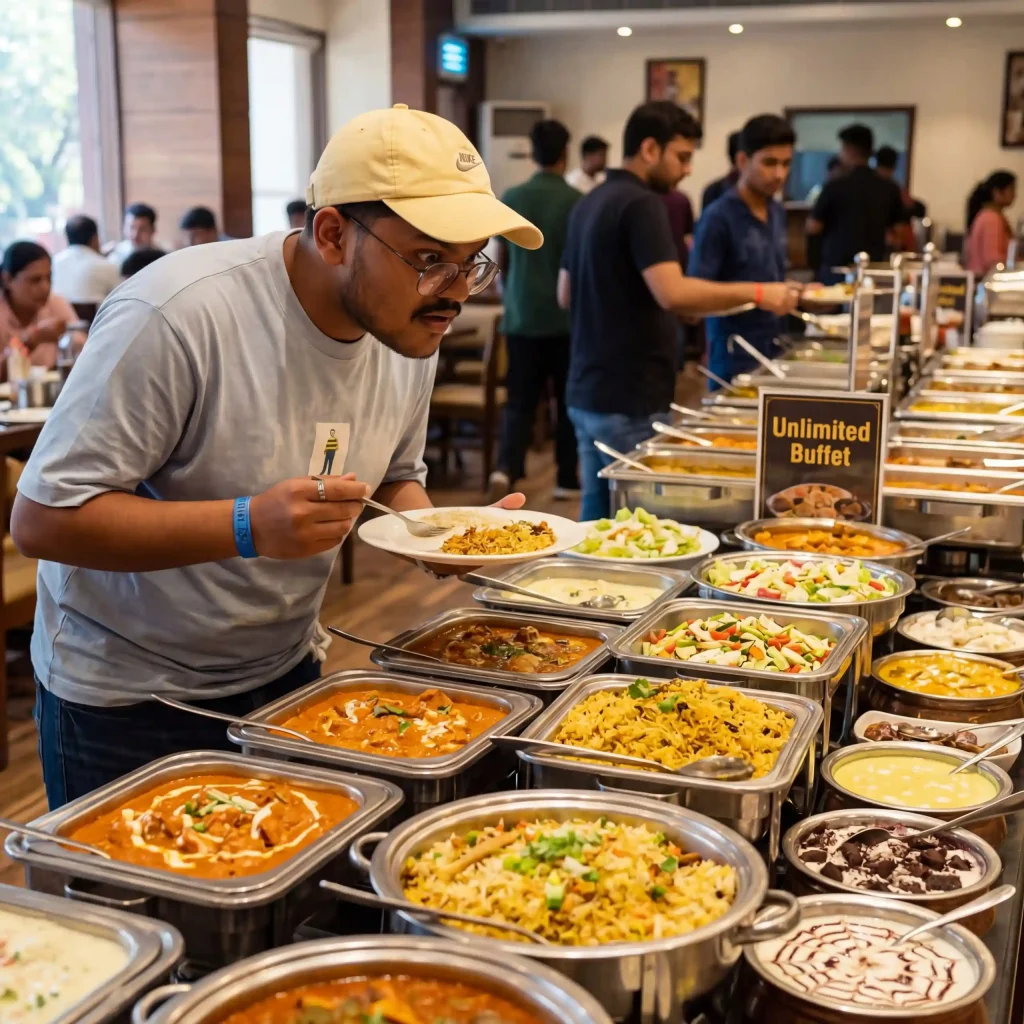
Lucky Yadav is a friend of mine and he was like many young people—curious, excited, and always ready to try something new. One evening while scrolling reels on his phone, he came across a tempting video of an unlimited buffet near his area. The food looked amazing endless pizza, fried snacks, sweets and all at a very cheap price. Without thinking much, he decided to go and try it the very next day.
At the restaurant, Lucky went all in. Plate after plate, he kept eating, trying to eat every new thing. Since it was unlimited food, there was no control. He ate more than his body actually needed mixing heavy, oily, and sugary foods in one sitting. At that moment, it felt fun and satisfying.
But within 3 to 5 days, things started going wrong. Lucky began to feel uncomfortable, his stomach felt heavy, he had bloating, and soon it turned into severe stomach pain. What he thought was just normal overeating quickly became serious. The pain increased, and he had to visit a doctor. Eventually, he ended up spending money on medicines and treatment.
This real-based story shows a simple truth: sometimes the excitement of unlimited food hides the real cost behind it. Lucky tried to save money and enjoy variety of food in one go, but his body couldn’t handle the overload of unhealthy processed items. What looked cheap at first turned into unexpected health problems and expenses.
His experience is a reminder that our body has limits. Ignoring those limits even for a few days can lead to discomfort, illness, and regret.
The Viral Hunger: Why Influencers Keep Pushing Unlimited food Content.
Social media has turned food into entertainment. Today’s world, it’s not just about eating, it’s about watching, sharing, and going viral.
The Algorithm Loves Excess
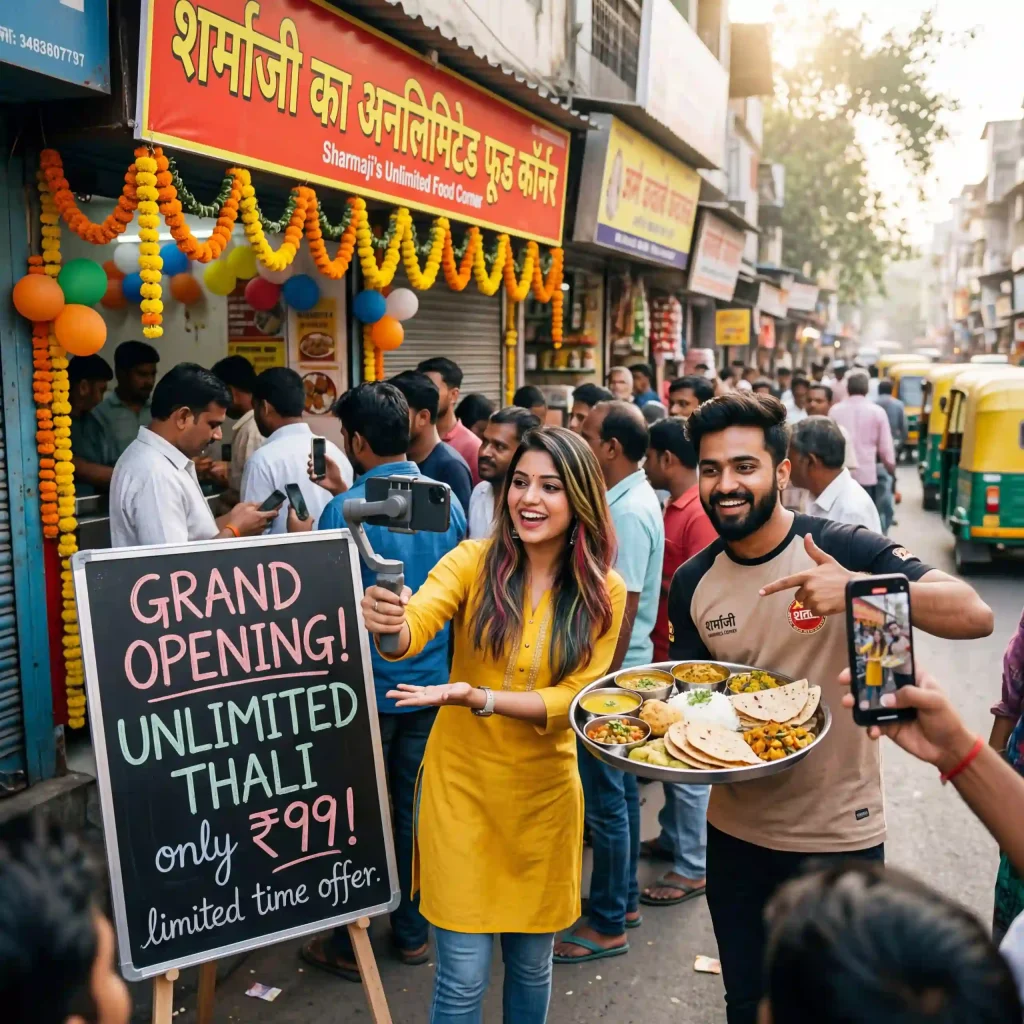
Platforms like Instagram and YouTube don’t promote healthy content. They promote engaging content. Videos with large portions, cheese pulls, or extreme eating get more likes, shares, and watch time. This tells the algorithm to push them to more people.
In the world of influencers, normal food doesn’t go viral—but extreme food does. A simple meal won’t get attention, but a table full of unlimited food will.
That’s why creators keep pushing:
– Eat everything in 30 minutes” challenges
– Giant buffet reviews
– Unlimited pizza, desserts, or street food
These videos trigger curiosity and shock value. People click because they want to see how much someone can eat, not just what they eat.
Another reason is simple psychology. When people see someone enjoying unlimited food, it creates instant craving and curiosity. Viewers start thinking, “If they can eat so much at this price, why shouldn’t I try?”
This fear of missing out pushes more people to visit these places. Influencers understand this behaviour very well, so they focus on showing quantity over quality because more food on the table means more views on the video.
Many restaurants also invite influencers and offer them free meals or paid promotions to showcase their unlimited deals. For a food business, it is an easy way to attract large crowds quickly. For influencers, it is easy content that performs well without much effort. This creates a cycle where more creators post about unlimited food, more people get influenced, and the trend keeps growing.
The problem is that what goes viral is not always what is healthy. Most of this content hides the reality of low-quality ingredients, overeating, and long-term health risks.
Influencers rarely show the after effects; they only show the fun part. As a result, people start normalizing unhealthy eating habits without realizing the bad impact on their body.
FAQ (Frequently Asked Questions)
Q1) Is unlimited meals really a good deal ?
At first, it looks like a great deal because you can eat as much as you want at a low price. But in reality, most people cannot eat enough to match the value. They focus more on quantity than quality which means you may end up eating low-quality food that is not good for your health.
Q2) Why is unlimited food so cheap ?
They sell in cheap because these businesses use low-cost ingredients like low grade refined flour, cheap oil, and bulk-prepared gravies. They also depend on the fact that most people eat a normal amount, so they still make profit even if a few people eat more.
Q3) Is it okay to go occasionally and eat unlimitedly ?
Yes, once in a while is fine if you control your portions and choices. The problem starts when you eat too much and go like every 4 to 5 days.
Q4) Why Influencer promotes Unlimited food ?
Influencers promote this type of content because it performs extremely well on social media. Large portions, variety, and visually rich meals attract more viewers, likes, and shares. Restaurants often invite influencers and offer free meals or pay them to promote their deals. This creates a win-win situation for both, but the focus stays on attraction, not on health or quality.
Q5) Which one is better Unlimited meals or Tiffin Service or Food Delivery Apps?
| Factor | Unlimited Meals | Food Delivery Apps | Tiffin Service |
| Food Quality | Often low to medium | Medium (depends on restaurant) | High (home-style, fresh) |
| Oil & Ingredients | High oil, cheap ingredients | Often oily & processed | Controlled oil, better ingredients |
| Portion Control | No control (overeating common) | Medium control | Proper balanced portions |
| Health Impact | Risk of overeating & health issues | Can affect health if frequent | Supports long-term health |
| Consistency | Not consistent | Varies daily | Consistent meals daily |
| Cost Value | Looks cheap but low quality | Can get expensive | Affordable & value for money |
| Best For | Occasional outing | Busy days | Daily healthy lifestyle |
In this table you can clearly see Tiffin service is better than Unlimited meals and Food Delivery Apps and with Ghar Ka Bana Shudhkhana, you don’t just get food, you get fresh, home-style meals that support your health, routine, and budget every single day.
Q6) How Unlimited food model works?
This model works on a human psychology and smart cost control. Businesses use low-cost ingredients like low grade refined flour, cheap oil, and bulk-made gravies to keep expenses low.
Most customers eat a limited quantity, while only a few eat excessively, so overall profit stays balanced. Simple setups, family-run operations, and no marketing costs further increase their profit margins.
Q7) What are the health issues of eating from an Unlimited meals shop/cart?
Eating regularly from these places can lead to multiple health problems like Overeating can cause weight gain and slow digestion. The food is often high in refined carbs and unhealthy fats, which increases the risk of diabetes, heart disease, and high cholesterol. Over time, low-quality nutrition can also affect energy levels, immunity, and even mental health.
Conclusion
In the end, what looks cheap comes with hidden costs. The idea of unlimited food feels attractive because it gives a sense of freedom and value, but in reality, it is designed to make you overeat and ignore quality.
It slowly affects your body through overeating, blood sugar imbalance, and long-term health risks like obesity and heart problems. Even real experiences, like Lucky’s story, show how quickly things can go wrong when we ignore our body’s limits. Social media and influencers further push this trend, making it look fun and normal, while hiding the real consequences behind it.
The truth is simple: your body does not need unlimited quantity. Choosing unlimited food again and again may save money today, but it can cost much more in the future through health issues and medical expenses. Even options like Unlimited pizza or buffet-style meals should be treated as occasional treats, not regular habits with limited eating.
This is exactly why Ghar Ka Bana Shudhkhana focuses on bringing back the value of Ghar ka khana where food not only fills your stomach but also nourishes your body. Instead of chasing quantity, our real goal is balance, consistency, and long-term health.
Because at the end of the day, investing in the right food equals investing in yourself.
For more exciting Offers and updates, follow us on Instagram and Facebook
Last updated: 2 April 2026